Reunion Word Game Hints and Strategies
These strategies are built for repeat use, not one-off luck. If you follow this order of play, you will usually reduce wasted moves and improve board control.
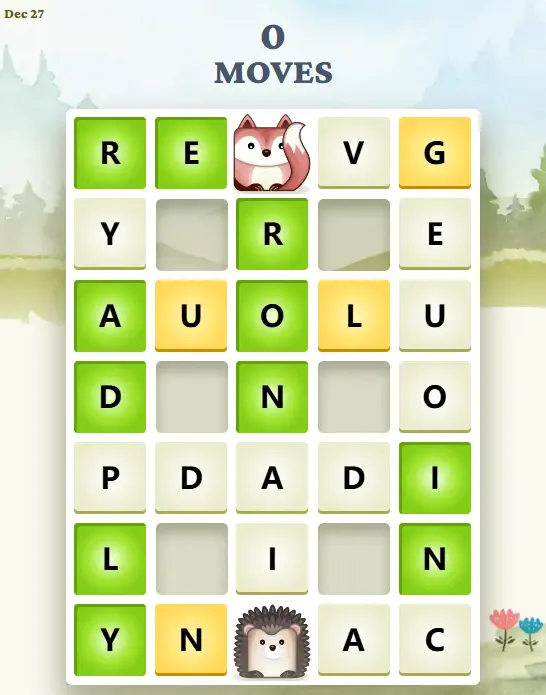
These strategies are built for repeat use, not one-off luck. If you follow this order of play, you will usually reduce wasted moves and improve board control.
Do not start by chasing every yellow tile. First secure letters that are clearly correct. This stabilizes the board and reduces future ambiguity.
A yellow tile confirms relevance to the row or column, not exact location. Evaluate neighboring letters before moving it again.
Short valid words reveal structure quickly. Use them to anchor larger word paths rather than trying to solve the full board at once.
Animal tiles can split columns into two valid words. Treat them as structure markers and avoid random swaps around them.
After every three moves, stop and verify whether certainty increased. If not, rewind your logic and choose a safer branch.
If your streak breaks often, the issue is usually decision stability, not vocabulary. Use a simple streak framework:
Start by locking one high-confidence green tile instead of chasing multiple yellow possibilities. This reduces board noise and gives you a stable reference point for the next moves.
Prioritize high-confidence greens first. Then use row and column context to resolve yellow tiles. Yellow indicates relevance, not final placement, so moving yellows too early often increases wasted moves.
Use short validation cycles: make 2-3 moves, then reassess certainty before continuing. Avoid speculative chains, and log one reversal pattern after each puzzle so the same mistake is less likely in the next run.
Disclaimer: This website is an independent guide resource. It is not affiliated with, endorsed by, or connected to the original game publisher.